
Finding Residents Across Miami
Begin with the record that answers the real question. The Miami-Dade Property Search connects an address, owner name, subdivision, or folio to an assessed parcel. A folio is the county's unique parcel number. It is the best first stop for ownership, but it does not list every occupant. The voter tool confirms one registered voter when the required personal facts are known. The Clerk's indexes connect names with deeds, court cases, probate, marriage licenses, and other dated events. Printed directories and census material handle the historical side.
Miami renters, family members, and guests may never appear on a property card. A tax mailing address can also belong to an owner who lives elsewhere. Treat each result as evidence for a certain date and purpose, not as a live household roster. Two records that agree on a middle name, address, role, and time are much safer than one same-name result.
- Normalize the name or address, including a condo unit and directional prefix.
- Check the county parcel roll for a folio, situs address, owner, and tax-mail recipient.
- Use the official voter or court search only when it fits the question.
- Follow a recorded deed, probate case, or directory entry to a second dated source.
- Ask the custodian, library, or archive when the online index stops.
Miami Resident Record Keepers
Miami is the county seat, yet the city does not keep deeds or most trial-court files. The Miami-Dade Clerk of the Court and Comptroller serves as recorder and court clerk. The Property Appraiser maintains parcel assessments, and Elections handles county voter services. City Hall is the right custodian for permits, code files, planning records, and municipal correspondence. That split matters: send a deed question to the Clerk, an ownership question to the Appraiser, and a building-jacket question to the city only after confirming City of Miami jurisdiction.
Miami-Dade County Recorder
20 NW 1st Avenue, Suite 5.246
Miami, FL 33128
305-275-1155
Miami-Dade Property Appraiser
Countywide owner, address, subdivision, and folio service
Free online search
Miami-Dade Elections
2700 NW 87th Avenue
Doral, FL 33172
305-499-8683
Elections Services
Miami Property Names and Addresses
The Property Search accepts an address, owner name, subdivision, or folio. A parcel card returns the situs address, legal description, owner and mailing address, assessed values, exemptions, sales, building facts, and map links. Situs means the physical location of the parcel. The mailing field is where the tax notice goes. If those two addresses differ, do not assume the owner occupies the Miami property.
The county portal may be reached from its official search page. The captured search interface shows why the parcel roll works as a practical Miami residents directory for owners, while its fields also mark the limits of that inference.
Carry the folio into GIS and recorded documents. A street string may change, but the parcel and legal description provide a much steadier bridge.
Owner is not occupant. Homestead status may support a residence inference for a tax year, but it is not a list of everyone in the home.
Miami's City and Postal Split
“Miami” on an envelope describes postal geography, not necessarily City of Miami jurisdiction. Coral Gables, other municipalities, and unincorporated Miami-Dade addresses can use Miami mailing names. City guidance gives a useful check: City of Miami folios begin with “01.” Confirm the municipality, folio, and situs address before requesting a city permit jacket or code file.
The City of Miami Public Records Center accepts requests and lets a requester track them. Alternate channels include email, phone, mail, and an in-person request. The request should name the department, address or folio, date range, and records sought. Florida law does not require a special form or a statement explaining why the record is wanted.
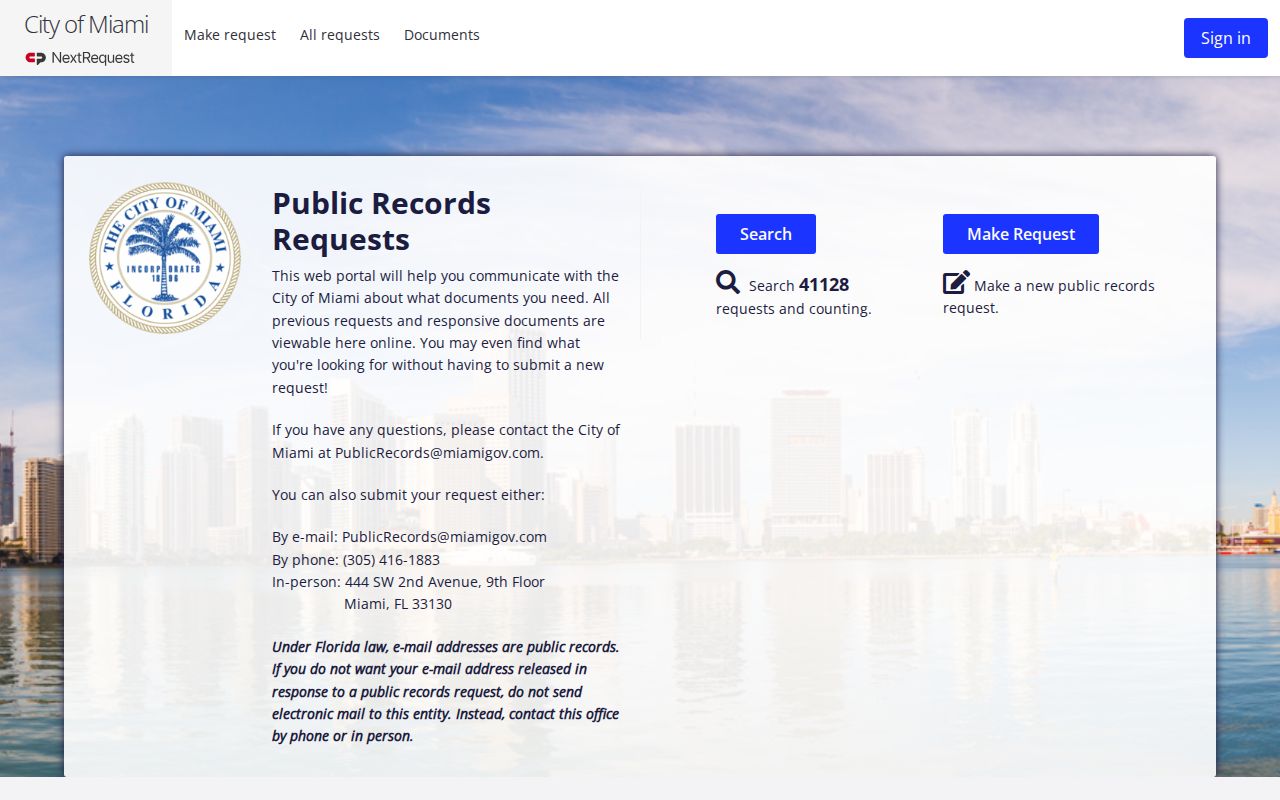
The city portal is most useful after jurisdiction has been settled. Deeds and county court files still belong with the Miami-Dade Clerk.
Miami-Dade Deeds by Party
The County Recorder indexes deeds, mortgages, liens, plats, judgments, declarations of domicile, powers of attorney, and releases. Search by party name, Clerk's File Number, book and page, or legal description. Advanced mode adds document type and date range. In the index, grantor means the party giving an interest; grantee is the party receiving it. A recorded deed can date an ownership transfer, but it cannot prove that every named party lived at the parcel.
| Search key | Best use | Format note |
|---|---|---|
| Party name | Find instruments tied to a person or company | Surname first, then given name |
| CFN | Open one known filing | Unique Clerk's File Number |
| Book and page | Follow a citation from another deed | Numeric pair |
| Legal description | Keep one parcel through street-name changes | Subdivision, lot, block, and plat |
The Official Records overview links to the index and explains recorder access.
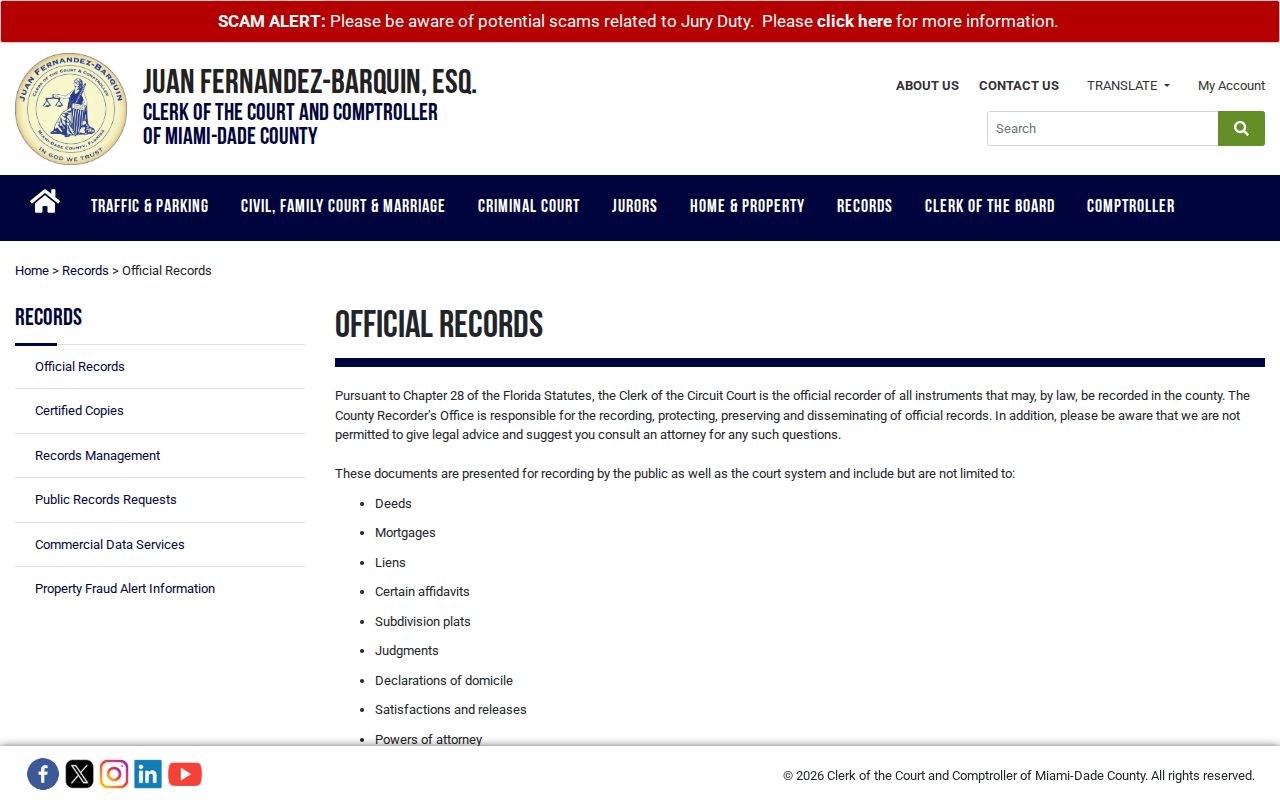
Most online documents date from 1974 forward. Earlier names and instruments continue at the Records Library through books, microfilm, staff help, mail requests, and public computers.
Current Miami Directory Sources
Modern records divide people by role. Pick the roll that can confirm the needed fact, then compare it with a second official source. None is a complete census of Miami residents.
| Source | Who It Lists | Keeper | Access |
|---|---|---|---|
| Property roll | Parcel owners and tax-mail recipients | Property Appraiser | Free portal |
| Voter status | One registered voter | Florida and Miami-Dade Elections | Individual lookup |
| Official Records | Parties to deeds, liens, and other filings | County Recorder | Free standard index |
| Court indexes | Named parties and case roles | Miami-Dade Clerk | Free standard search |
| License records | Licensed professionals and businesses | Florida agencies | Free verification |
A modern Miami resident lookup should preserve dates and roles. A deed grantee, court defendant, registered agent, and tax-mail recipient are not interchangeable labels.
Florida Voter Records in Miami
The Florida Voter Information Lookup is an individualized status tool, not a public street roster. It can help confirm a registration when the searcher supplies the required identifying facts. Miami-Dade Elections provides local registration and precinct services. Ballot choices are secret.
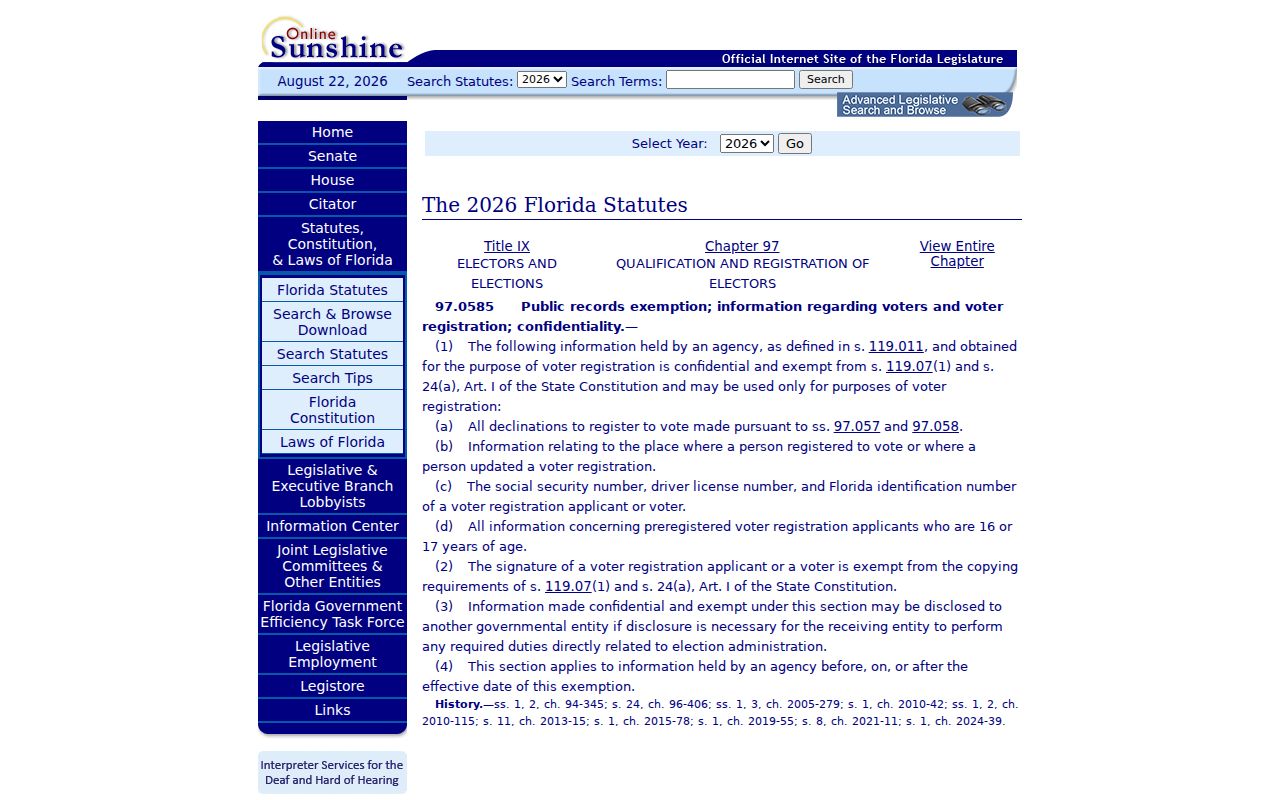
Florida Statute §97.0585 protects Social Security numbers, driver license and Florida ID numbers, registration-source information, minors' preregistration data, and copied signatures. Other exemptions can shield an address. The state's confidentiality rules are a reason to use the official interface as designed, never a reason to try to reconstruct withheld fields.
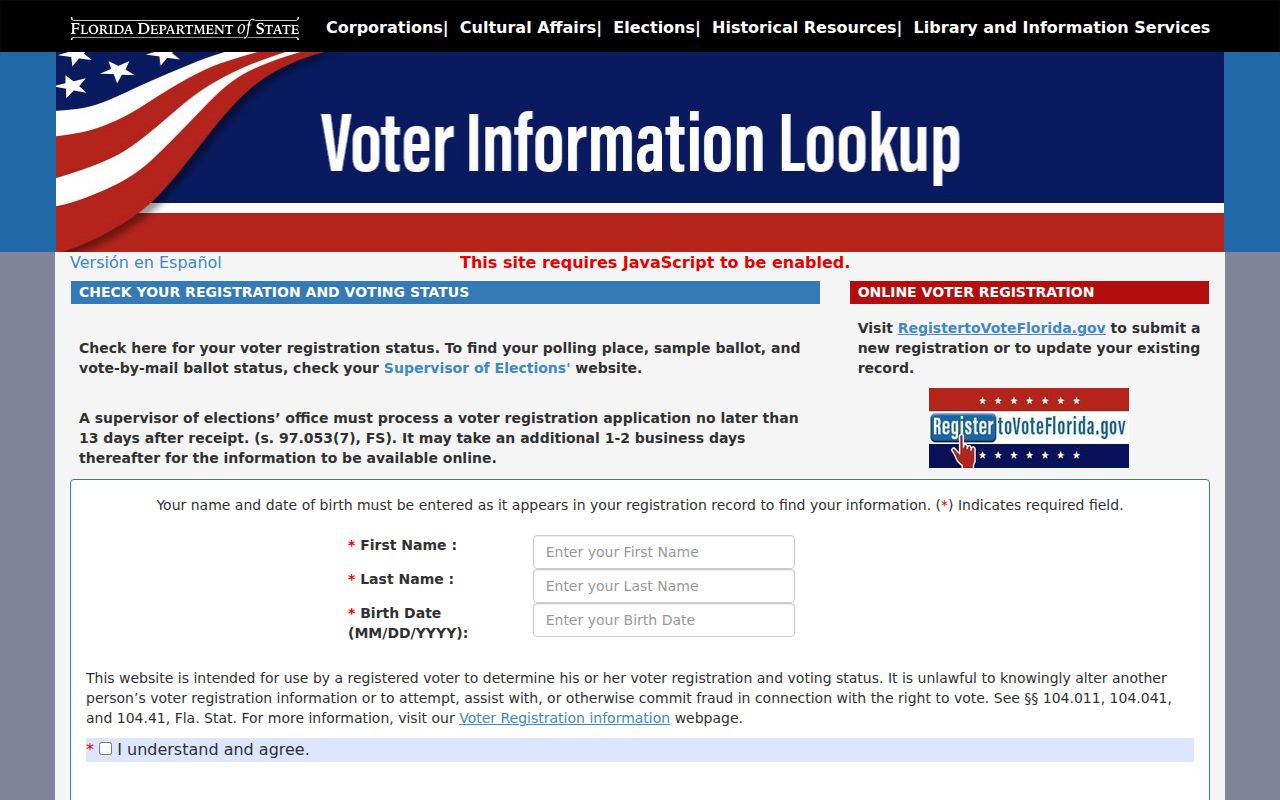
The form supports a narrow confirmation. It does not show who voted for whom or prove who else shares a Miami home.
The Miami-Dade Elections hub supplies county services and contact routes.
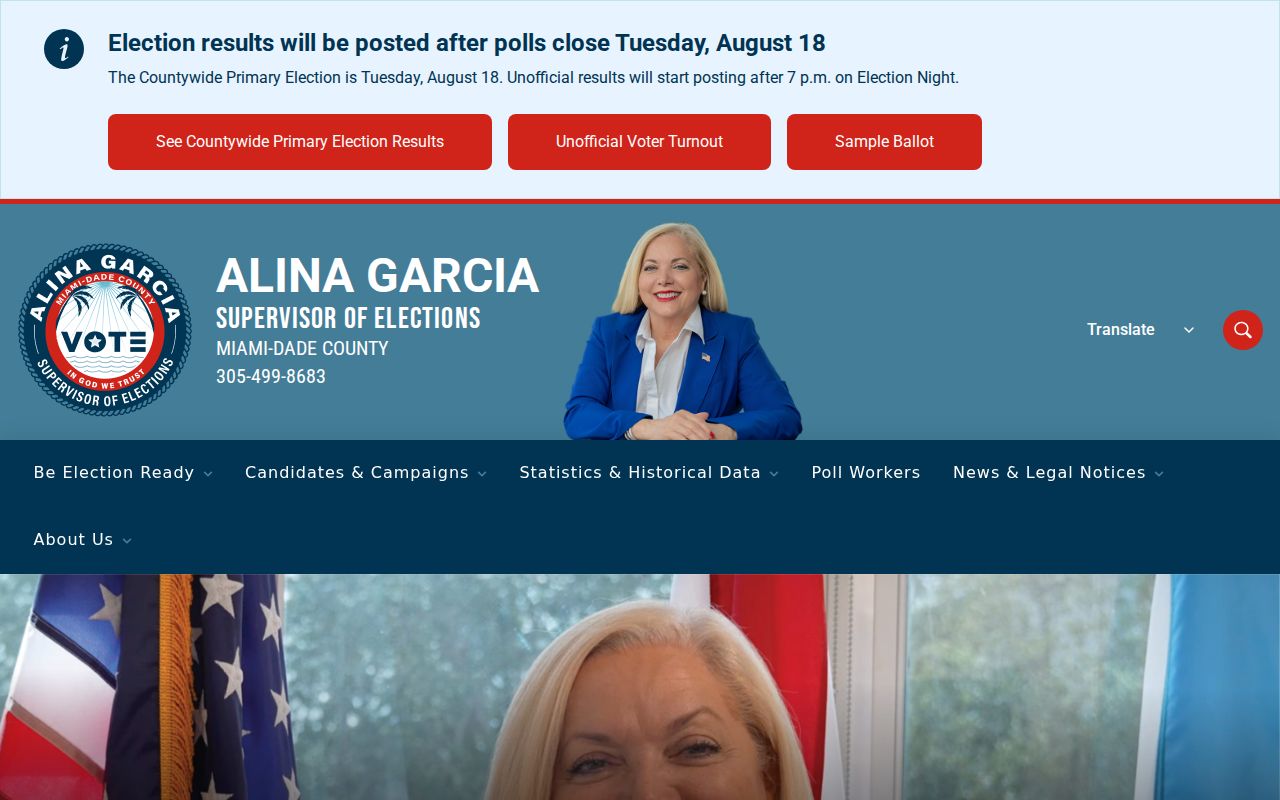
Use the county office for registration service questions and the state statute for the line between open and confidential voter data.
Requesting Miami Public Records
Florida's Public Records Law, Chapter 119, and the state constitution create broad rights to inspect nonexempt records. A custodian must acknowledge requests promptly and respond in good faith. No special wording or reason is required. Ask for a defined department, date range, address, folio, case, or document type. Narrow terms reduce review time and the chance of a large production charge.
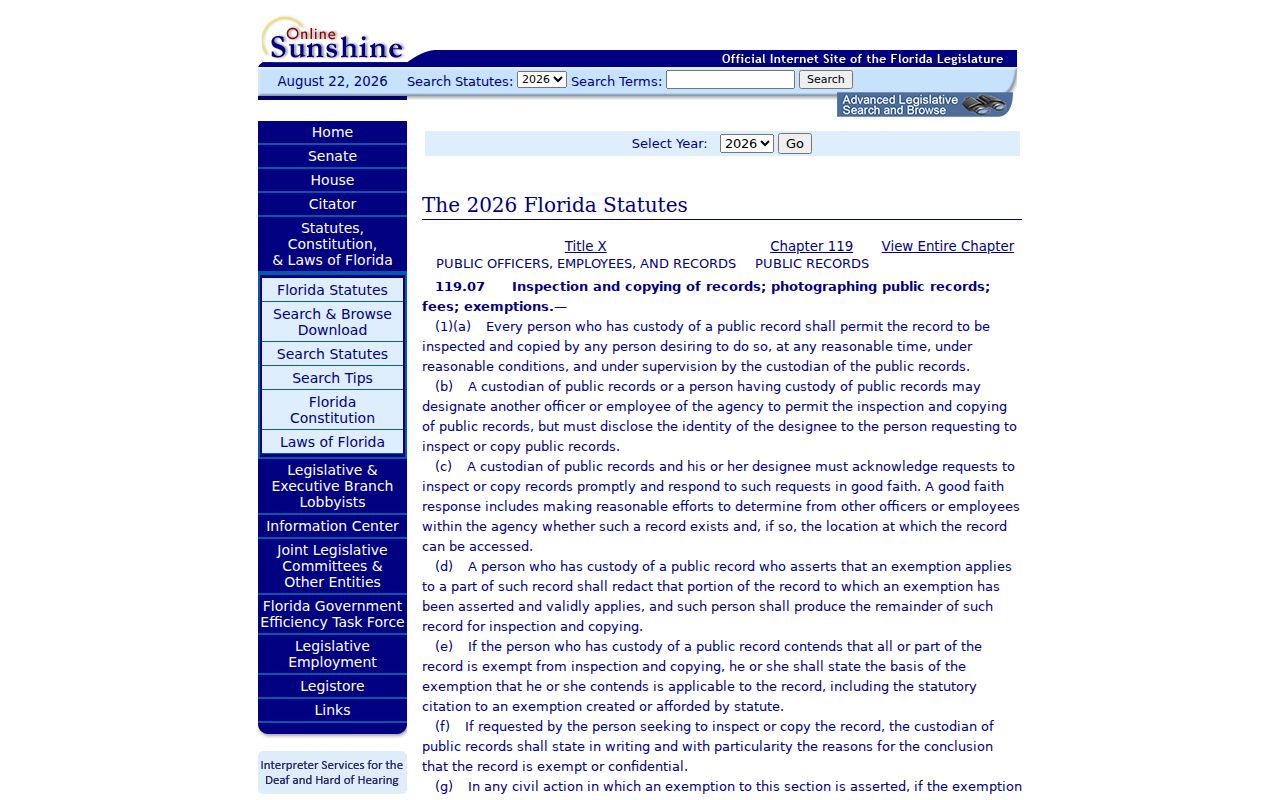
Florida Statute §119.07 addresses inspection, redaction, and permitted fees.
If material is withheld, ask the custodian to identify the exemption. An index entry without an online image may still be viewable at a public terminal, orderable by mail, sealed, or legally exempt.
Miami's 1974 Records Divide
Most official-record documents can be searched online from 1974. That date is a portal cutoff, not the start of Miami-Dade recordkeeping. The Clerk's Records Library keeps older indexes and books and is adding material over time. State Archives microfilm reaches much farther: deed records for 1844 through 1902, marriage records for 1840 through 1917, probate for 1869 through 1930, and naturalizations for 1876 through 1906.
Carry a full name, document type, legal description, and any known book and page to the library. Public computers allow self-research. Staff and mail searches are also documented. This online-versus-counter split is one of the most useful facts in a Miami residents directory because a blank web result before 1974 says little about the paper record.
Note: Search the online index first, then preserve its spelling and citations before moving to the Records Library or State Archives.
Miami Court Records Need Context
The Miami-Dade Clerk separates Civil, Family and Probate OCS from its criminal search. OCS can be searched by standard or advanced criteria, including party name, case number, court type, and date. A docket is the chronological list of filings and events in a case. The role beside a name matters as much as the match: plaintiff, defendant, petitioner, respondent, personal representative, and interested person describe different connections.
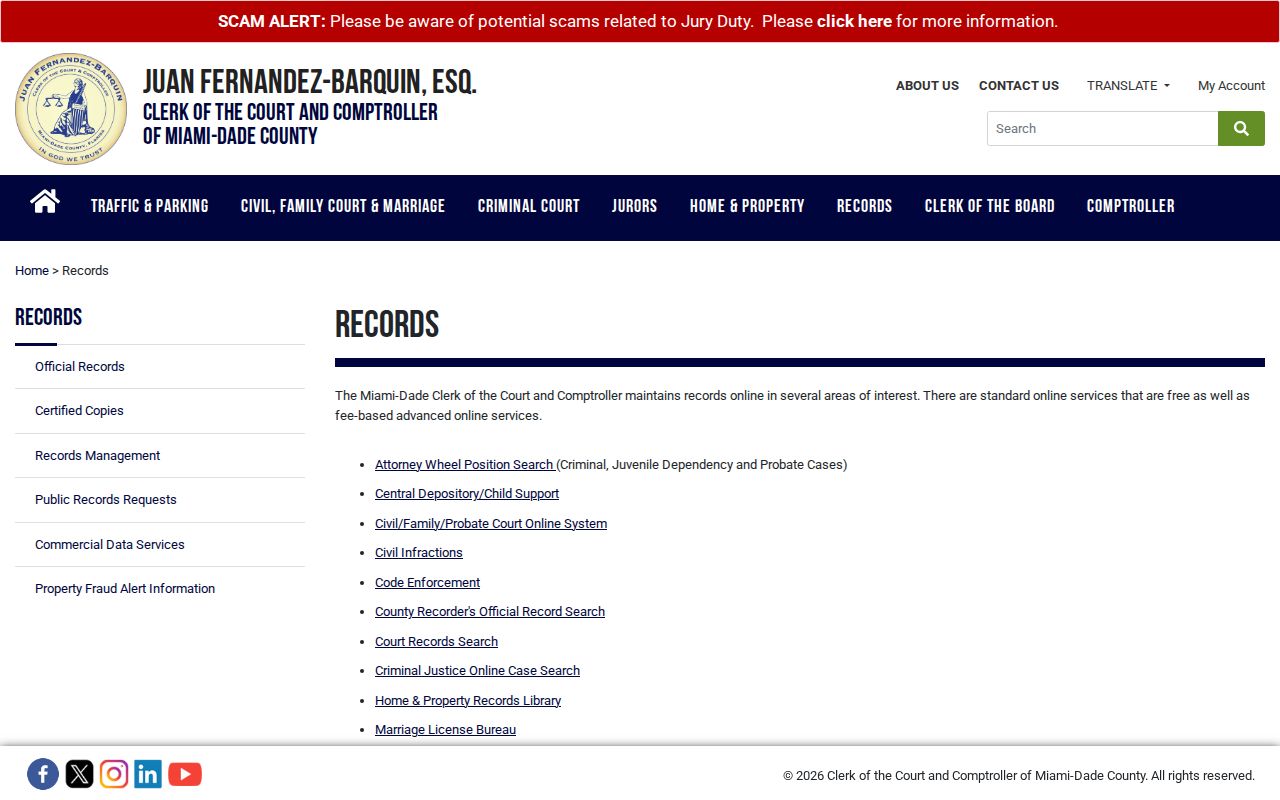
The Clerk records hub brings those court and official-record routes together.
Protected and sealed matters do not appear like ordinary public cases. For a probate or family-history lead, compare the case role and dates with a death certificate, obituary, deed, or directory entry.
Miami Vital Records and Family
Vital certificates answer a different question from a residents directory. Florida birth certificates less than 125 years old are limited to eligible applicants who provide identification and, where required, proof of relationship or authority. Death certificates without cause are generally available, but the cause-of-death portion remains confidential for 50 years except to eligible requesters. State marriage and dissolution reports begin June 6, 1927. A dissolution certificate is only an abstract; the fuller court file remains with the clerk where the case was filed.
The Florida Department of Health documents mail, walk-in, and approved online order channels for birth, death, marriage, and dissolution certificates. Local birth and death service is also available through the Department of Health in Miami-Dade. Fees, identification, eligibility, and delivery options differ by certificate, so use the current application linked from the agency page. For genealogy, a death certificate can confirm a date and place, while an obituary, probate docket, cemetery entry, and directory can link relatives and an older Miami address.
Vital records should confirm a relationship or life event, not substitute for proof of current residence. Adoption files and many birth details stay closed unless an applicant qualifies under Florida law.
Verify Miami Same-Name Matches
Miami searches often involve compound surnames, accents, maiden names, initials, and both paternal and maternal family names. Start with the narrowest exact spelling from a known record. Then test controlled variants one at a time. Keep a note of which spelling came from which custodian. That discipline prevents two distinct residents from being merged simply because an index dropped an accent or shortened a middle name.
Compare at least two official sources and read the role attached to each name. A registered agent on a Sunbiz filing is not necessarily the business owner. A tax-mail recipient may not occupy the parcel. A court party may have appeared only once in a dated dispute. Strong matches align several details, such as a middle initial, date window, parcel, legal description, relative, or case role. When facts conflict, preserve both dates and ask whether the person moved, the record served a different purpose, or the names belong to different people.
- Index
- A finding aid that points to a record; it may not reproduce the complete document.
- Certified copy
- An official copy authenticated by the custodian, used when formal proof is required.
- Disposition
- The recorded outcome of a court charge or case, not merely the fact that it was filed.
Miami Privacy Has Firm Boundaries
Florida balances open government with specific exemptions. Safe at Home and occupational, victim, and official protections can remove an address from public view. Birth records less than 125 years old are confidential except to eligible requesters. A death certificate without cause is generally public, while cause-of-death information remains restricted for 50 years except to eligible requesters.
The voter confidentiality statute is available from the Florida Legislature.
Respect a withheld field. Miami public records may be used for lawful family, estate, property, and civic research, never to stalk, intimidate, or harm a person.
Miami Property Fraud Alerts
The Miami-Dade Clerk's free Property Fraud Alert watches recordings associated with a registered folio. The service aims to email a notice within 24 hours after a matching document is recorded. It does not freeze title or decide whether a filing is valid. The useful next step is to use the notice's CFN to inspect the official instrument and contact the Clerk or law enforcement if the document appears unauthorized.
A 2024 Florida change also made alert-registration information confidential, including the subscriber's submitted contact and parcel data. That pairing shows the balance clearly: the recorded instrument stays open while the monitor's private signup data is shielded.
Historical Miami Directory Shelves
The Main Library's Genealogy Collection holds more than 27,000 bound volumes and 35,000 microforms, including city directories, telephone indexes, the Miami-Dade Obituary Index, Florida censuses, passenger lists, draft cards, and Miami airplane arrivals from 1930 through 1942. Most material is for library use, with reference help available onsite and by e-reference. HistoryMiami offers city directories, yearbooks, newspapers, maps, manuscripts, and appointment research. University of Miami catalogs an 1896-97 Dade County directory reprint.
The MDPLS Genealogy Digital Collection gives a view into that local shelf.
Florida Memory digitizes Miami's first telephone directory from about 1899 or 1900, and the Library of Congress has a 569-image 1938-39 telephone book. “Greater Miami” volumes can include nearby municipalities, so record the title page, year, publisher, and service area before treating an entry as City of Miami evidence. The full collection method belongs in the Miami city directory.