
Walk a Miami Street by Address
A sound Miami street directory search separates ownership from occupancy. The county Property Appraiser can connect an address to a parcel owner, tax mailing address, folio, legal description, exemptions, and sale data. Those facts do not name every person who lives there. Voter data, when obtained through lawful channels, may show registered voters at an address, while printed reverse directories can identify listed occupants in older years. Use dates at every step. A deed proves a transfer, a permit dates work, and a directory entry reflects only its publication period.
- Normalize the address in Miami-Dade Address Search, keeping the quadrant, street type, unit, ZIP, and municipality.
- Open Miami-Dade Property Search. Save the folio, owner, situs address, mailing address, and full legal description.
- Browse the parcel and nearby lots in the Land Information Viewer. This reveals where the street crosses boundaries or changes parcel patterns.
- Use the legal description or current deed reference in Official Records, then follow grantors and grantees through earlier transfers.
- For occupant evidence, request lawfully available voter data or consult a dated street section in a reverse directory.
The flow is address to parcel, parcel to owner, owner to deed, then dated sources to possible occupants. If the goal narrows to one named person, the Miami resident lookup has a different verification path.
Normalize Miami Street Records
Miami's grid makes small omissions costly. Flagler Street divides north from south, while Miami Avenue divides east from west. Numbered streets tend to run east-west and numbered avenues north-south. Leaving out NW, NE, SW, or SE can move a search across the city. A swapped street and avenue can do the same. The county parser is useful because it breaks the address into fields instead of trusting one loose text string.
| Address field | Use | Miami caution |
|---|---|---|
| House Number | Sets the numbered site | Confirm older numbering in dated sources |
| Pre-Direction | Retains NW, NE, SW, or SE | A missing quadrant can select another place |
| Street Name and Type | Separates name from Street, Avenue, Road, or Boulevard | Do not transpose numbered streets and avenues |
| Post-Direction | Preserves a direction after the name | Use it when the official address includes one |
| ZIP and Municipality | Narrows postal and city context | Miami mail does not prove City of Miami jurisdiction |
Try the Miami-Dade Address Search before copying the result into other systems. Keep both the standardized form and the spelling printed in an old source. The two versions help bridge a historical directory to the modern parcel.
The county address form shows why each component matters in a Miami street directory search.
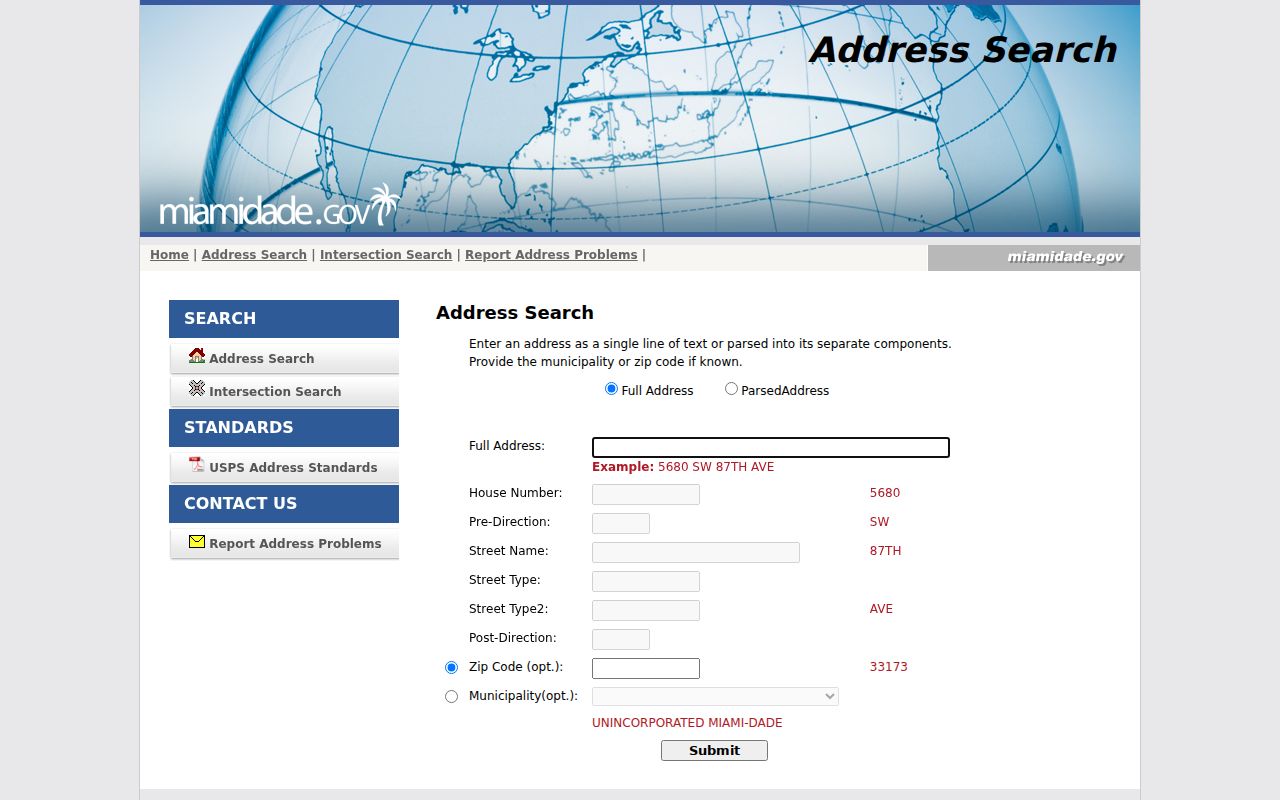
Its separate direction, street type, ZIP, and municipality controls reduce false matches before parcel work begins.
Read Miami Parcel Search Fields
The Miami-Dade Property Search accepts an address, owner name, subdivision name, or folio. Address is the natural start for a street directory. Folio is the stronger key once found because it identifies a particular tax parcel. In a condominium, keep the unit and folio together. A building-level address can produce many legally separate units and owners.
- Parcel
- A mapped tract or condominium unit used for assessment and legal records.
- Situs address
- The physical location of the parcel, which may differ from the tax mailing address.
- Plat
- A recorded map that defines a subdivision, lots, blocks, and other boundaries.
- Criss-cross directory
- A directory arranged by street and house number rather than only by a person's name.
A mailing address may belong to a remote owner, trust, company, or manager. Homestead can suggest that an owner claimed a qualifying principal residence for a given tax year, yet it still does not list a whole household. This is the key Miami myth to avoid: tax-roll owner and current resident are not interchangeable terms.
Miami Records Searchable by Street
Several custodians contribute to a Miami street directory, and each answers a different question. The best result comes from matching the same folio, legal description, address, and date across sources. Records that name an owner or applicant should not be treated as a household roster.
| Record Set | Keeper | What It Shows | Access |
|---|---|---|---|
| Assessment card | Miami-Dade Property Appraiser | Owner, situs, mailing address, folio, legal description, exemptions, sales | Free online search |
| Parcel GIS | Miami-Dade GIS | Parcels, nearby folios, districts, zoning and map layers | Free viewer and buffer tools |
| Deeds, liens and plats | Miami-Dade Clerk and County Recorder | Parties, transfer dates, CFN, book/page, legal description | Most records from 1974 online; earlier library access |
| Voter information | Miami-Dade Elections | Public voter fields when lawfully released | Individual status tool or public-file request |
| Permit and code files | City of Miami and Clerk | Applicants, contractors, respondents and dated work | Status search, records request, or paid microfilm search |
| Reverse directories | MDPLS and HistoryMiami | Listed occupants or subscribers at an address in a given edition | Digital items plus onsite collections |
Online access is only one channel. The Clerk's Records Library has public computers, staff searches, mail service, and older books. City records may be requested through the web portal, email, phone, mail, or in person. Library and archive holdings often need an onsite visit or an appointment. Those fallbacks matter when a web result shows an index but hides an image, or when the needed year predates online coverage.
Browse a Miami Street in GIS
The Miami-Dade Land Information Viewer searches by address, intersection, landmark, folio, township-range-section, municipality, commission district, or permit number. Once the map finds a parcel, select and identify nearby outlines. Aerial and street basemaps, layer controls, measurement tools, and parcel details help distinguish a named street from the parcels that actually front it.
The official viewer provides the spatial side of Miami street directory research.
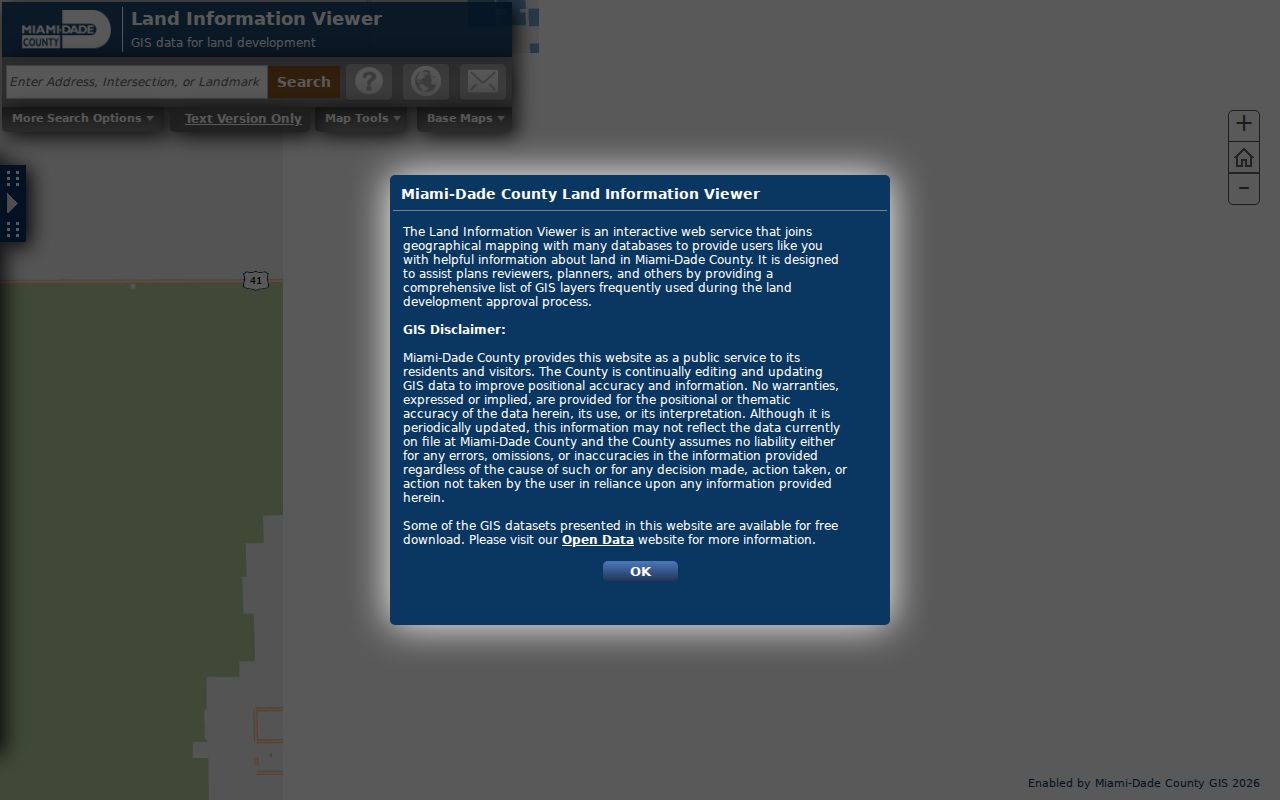
The parcel outlines let a reader move lot by lot without assuming that one incomplete address query returns the entire street.
Buffer is an especially useful insider tool. Select a parcel, enter a distance in feet, choose the parcel layer, and create the buffer. It returns parcels within the chosen distance. That is not automatically a city block, and waterways or large lots can distort straight-line proximity, but the method is clear and repeatable.
Miami Streets Cross City Lines
A postal address ending in Miami may lie outside the City of Miami. County property, GIS, deed, and court systems still cover the wider county, but city permit and code files depend on municipal jurisdiction. City guidance uses a folio beginning with 01 as a quick City of Miami check. Confirm the municipality in the county address or parcel system before asking the City Building Department for records.
The City of Miami GIS applications add city-specific owner, zoning, land-use, neighborhood, service, and street-jurisdiction maps.
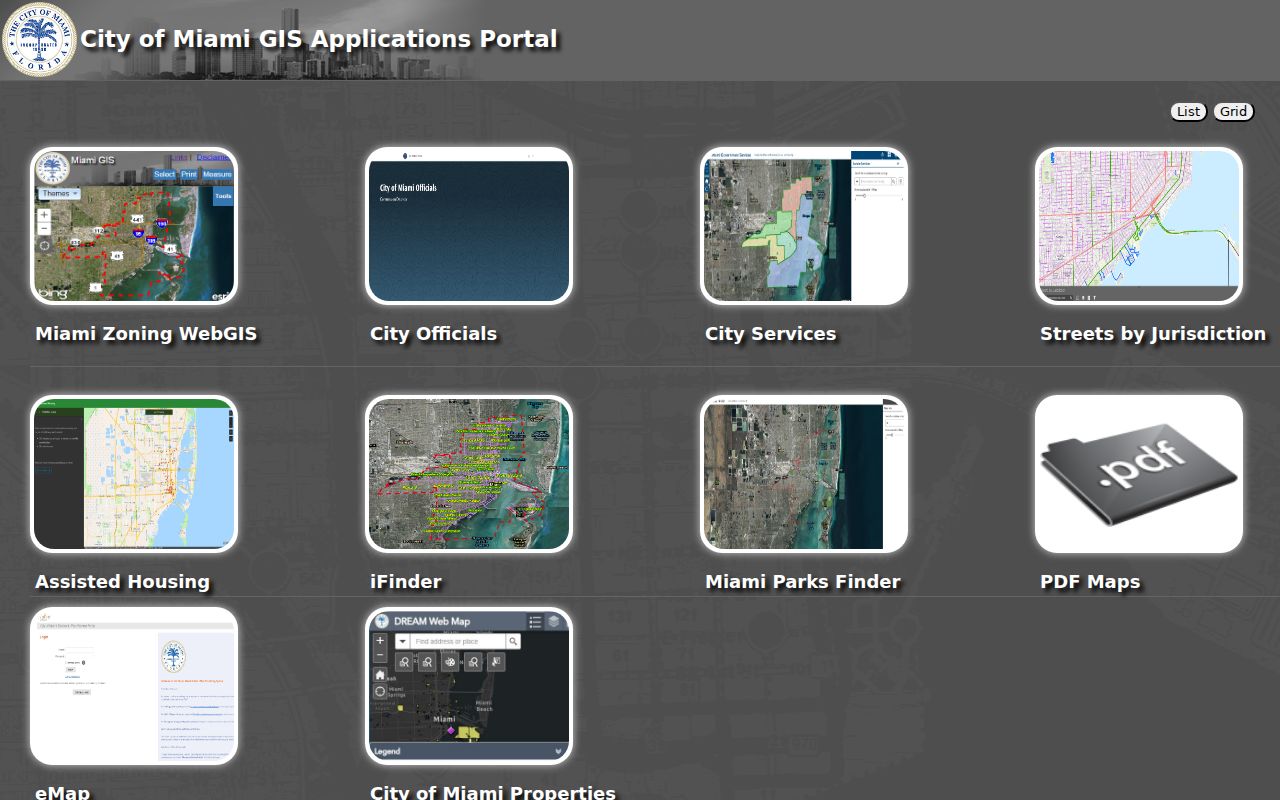
These city layers show which office can answer a permit or neighborhood question after the county establishes the parcel.
Follow Miami Deeds by Street
A deed search usually does not begin with a street box. Start with the parcel card's legal description and current purchase CFN, the Clerk's File Number for one instrument. The Miami-Dade Official Records index can then search by party name, CFN, recording book and page, or subdivision, lot, block, and plat. Advanced mode also offers document type and date range.
Most official records from 1974 forward are online. Earlier indexes and books remain at the Records Library, where visitors may use public computers. Staff searches cost $2 per name per year. Mail requests should state the full name and document type, plus the legal description or address for deeds and mortgages. Copies cost $1 per page, certification costs $2 per document, and an advanced search uses one $1 unit.
Keep the legal description fixed while owners change. That continuity helps when a street was renamed, a number changed, or a condo address appears in several formats.
Date Miami Addresses With Permits
Permit and code files add dates and named participants, not a complete resident list. A notice of commencement may identify the owner, contractor, and property description. Match its CFN and legal description to the permit jacket. Code records can be searched or requested by citation, folio, name, or mailing address, and may name an owner, registered agent, or respondent.
For deeper City of Miami building history, the building microfilm service charges a nonrefundable $44 for search, processing, and digital delivery. Certification adds $1 per page. The city states an estimate of about 20 working days after payment, and the OneDrive link expires after 14 days. Requesting only needed permits or plans can limit the review. Plans for designated large or sensitive structures require added authorization under Florida law.
Note: Use the folio and permit index first, since ordinary house-history work seldom needs certified plan pages.
Read Older Miami Streets in Reverse
A criss-cross section lists a street, then house numbers and named subscribers or occupants. It can bridge the gap between a deed owner and the people listed at that address. Miami holdings are spread across the Main Library Genealogy Collection, HistoryMiami, Florida Memory, and digitized telephone books. The local shelf does not publish a complete online list of every reverse-directory year, so ask the reference desk about the exact edition needed.
Historical service areas exceed city lines. A 1933 telephone book covered Greater Miami, including separate municipalities. Always record the title page, publisher, year, service area, abbreviation key, and image or page. For the collections themselves, consult the Miami city directories resource instead of treating one old volume as a modern street list.
Monitor Miami Street Deed Filings
The free Miami-Dade Property Fraud Alert can notify a subscriber within 24 hours when a document is recorded under a monitored name or folio. An alert is not title locking. Verify the Clerk's File Number and document image with the Recorder before drawing a conclusion.
The alert page shows the registration and document-check route used after a street directory search identifies a parcel.
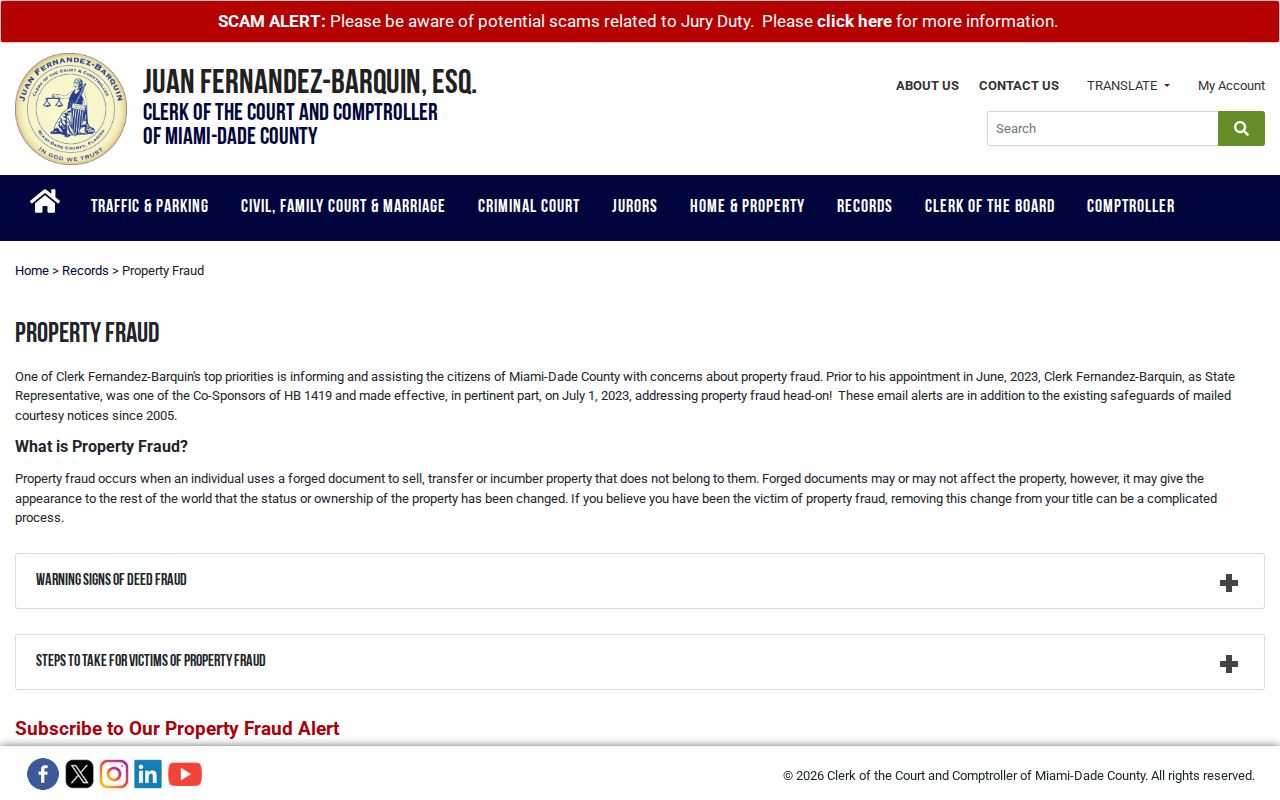
Florida law now keeps submitted alert contact, name, and parcel information confidential, while recorded instruments remain subject to their own access rules.
Limits of a Miami Street Directory
No public Miami street directory supplies a complete live household list. Property records name owners, not all occupants. Voter files omit nonvoters and protected fields, and the individual status tool is not designed as a street roster. Reverse directories include only listed subscribers for a past publication date. Deeds, permits, and code cases name parties tied to a transaction or file, which does not prove continuous residence.
Driver and vehicle address data is restricted, while utility and delivery customer information carries privacy and security limits. Safe at Home and Florida statutory exemptions can suppress or substitute an address for protected people. A missing name should therefore be read as no match in that source, not proof that the person never lived there.
Lawful use. Miami address records support family history, property research, civic questions, and personal safety. Never use them to stalk, harass, threaten, or harm anyone.