
Miami Resident Lookup Sources
No single roll lists every Miami resident. Choose the record that can confirm the fact in question, then use a second independent source to test the match. The county Property Appraiser is strong for ownership, while the Miami-Dade Clerk connects a name to deeds, court cases, marriages, and probate. Elections records concern registration, not property ownership. State filings show a public role or credential.
| Record | What It Confirms | Where to Search | Access |
|---|---|---|---|
| Property roll | Owner, tax mailing location, folio, possible homestead | Miami-Dade Property Search | Free current roll |
| Voter record | Registration status, residence and district | Florida and Miami-Dade Elections | Identity-gated lookup or lawful file request |
| Court docket | Party role, case type, filing date and events | Miami-Dade Clerk OCS or CJIS | Free index; images vary by access class |
| Vital and probate records | Marriage, death, relatives, representatives or heirs | Clerk and Florida Vital Statistics | Indexes and eligibility-controlled copies |
| Business and license filings | Public affiliation, credential, status and dated address | Sunbiz, DBPR and DOH | Free public indexes |
Start with the source closest to the known fact. An old Miami address points to the folio and deed chain. A possible family relationship points to probate, marriage, death, or an obituary. A company name belongs in Sunbiz. This keeps a resident lookup focused and reduces false matches.
Search Miami Court Parties
The Civil, Family and Probate Online Case Search accepts a party name, local case number, statewide case number, or hearing date. Optional category, status, and date filters depend on the search mode. Registration avoids CAPTCHA and search limits, but document access still follows Florida's court access matrix. Anonymous users may see an index card while a permitted registered user can see more images.
| Result field | What it means |
|---|---|
| Case number and filed date | The docket identity and when the matter began |
| Case type, status and party role | Why the name appears and whether the case remains open |
| Judge, attorneys and division | People and court unit tied to the case |
| Event date and description | A dated list of filings, hearings and rulings |
| Document link | An image only when that record and user class permit it |
The public result should never be read as proof of fault. A person may be a claimant, respondent, heir, personal representative, or another party. Adoption, juvenile, sealed, and expunged matters stay restricted. Certified copies come from the Clerk.
The current Miami-Dade court interface can be previewed through its official OCS source.
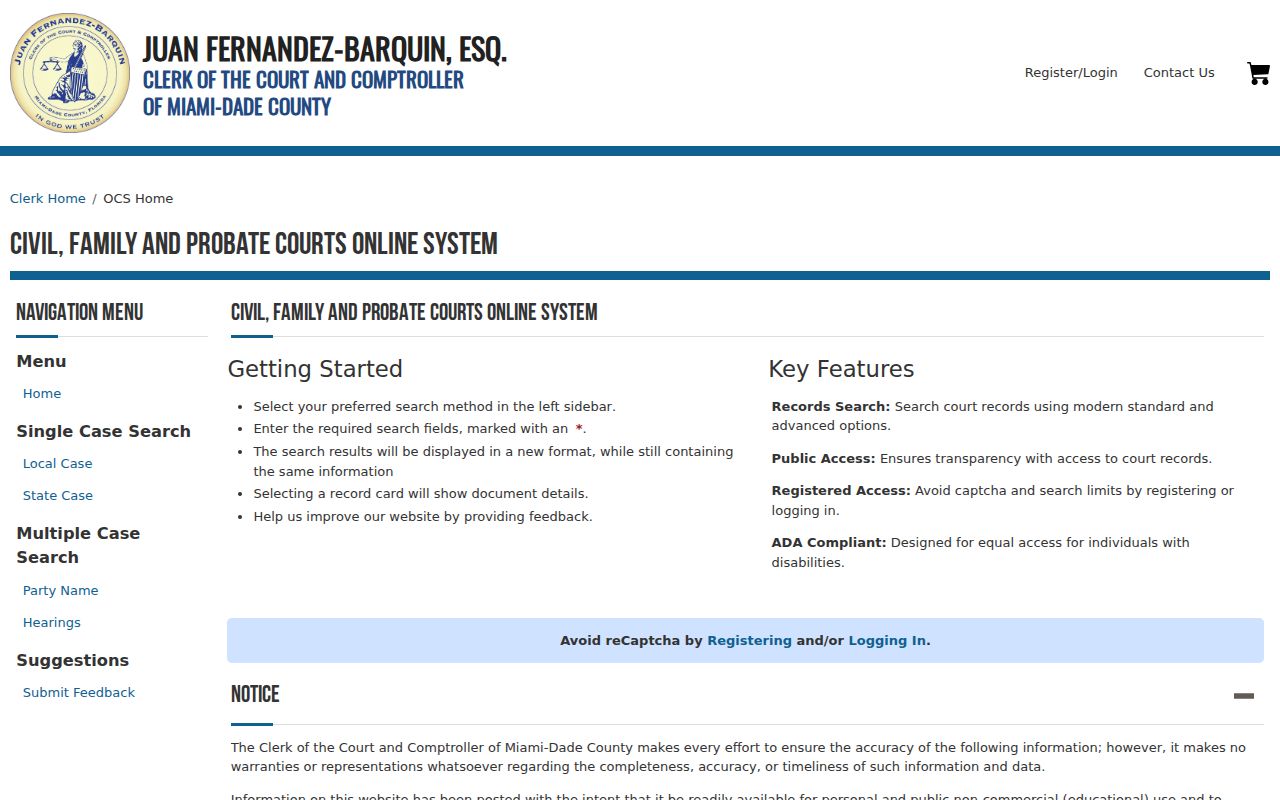
The screen shows why a narrow party name plus case type and date is more useful than a broad name alone.
Confirm Miami Name Variants
Miami names often appear with two surnames, accents, maternal and paternal order, married forms, initials, or anglicized spellings. Run the narrowest full form first. Then test controlled variants and record which official source supplied each spelling. Do not collapse two people just because their names look close.
A sound Miami resident lookup keeps a middle name or initial, suffix, spouse or associate, age band, and one independent place or date. Agreement between two official sources on a distinctive fact is far stronger than several loose name hits. A property owner's mailing address may be remote, and a registered agent's address shows an organizational role rather than a home.
Owner is not occupant. Compare the parcel's situs, tax mailing address, homestead status, deed date, and newer filings before describing a person as a Miami resident.
Verify a Miami Resident Lookup
Anchor the name to a dated Miami fact, then compare rather than assume. The Property Appraiser card can supply the folio, owner mailing address, legal description, sale dates, and exemption data. It is an assessment record, not proof of title or a household list. Court and vital sources answer different questions.
- Search the property roll by owner name and save the Miami situs, mailing address, folio, deed date, and legal description.
- Run the Clerk party search with the exact name, then a documented variant. Note the role, case date, and case type.
- Compare a marriage, death, probate, voter, business, or license record that shares a second fact. Participation history never reveals a vote choice.
- Ask the office that holds the record for a certified copy when formal proof is needed. A portal screen is not a certified record.
- Docket
- The dated list of events and filings in one court case.
- Index vs image
- An index describes a record. An image shows the filed document, when public access permits it.
- Certified copy
- An office-issued copy authenticated as a true copy of the record it holds.
Miami Criminal Record Channels
The Clerk's Criminal Justice search accepts case number, statewide case number, citation or police number, defendant name, and jail number. It is a local case index. Protected cases are omitted, and a filing or arrest does not establish a conviction. The Florida Department of Law Enforcement is the statewide criminal-history custodian.
The local criminal interface is shown in this Clerk search capture.
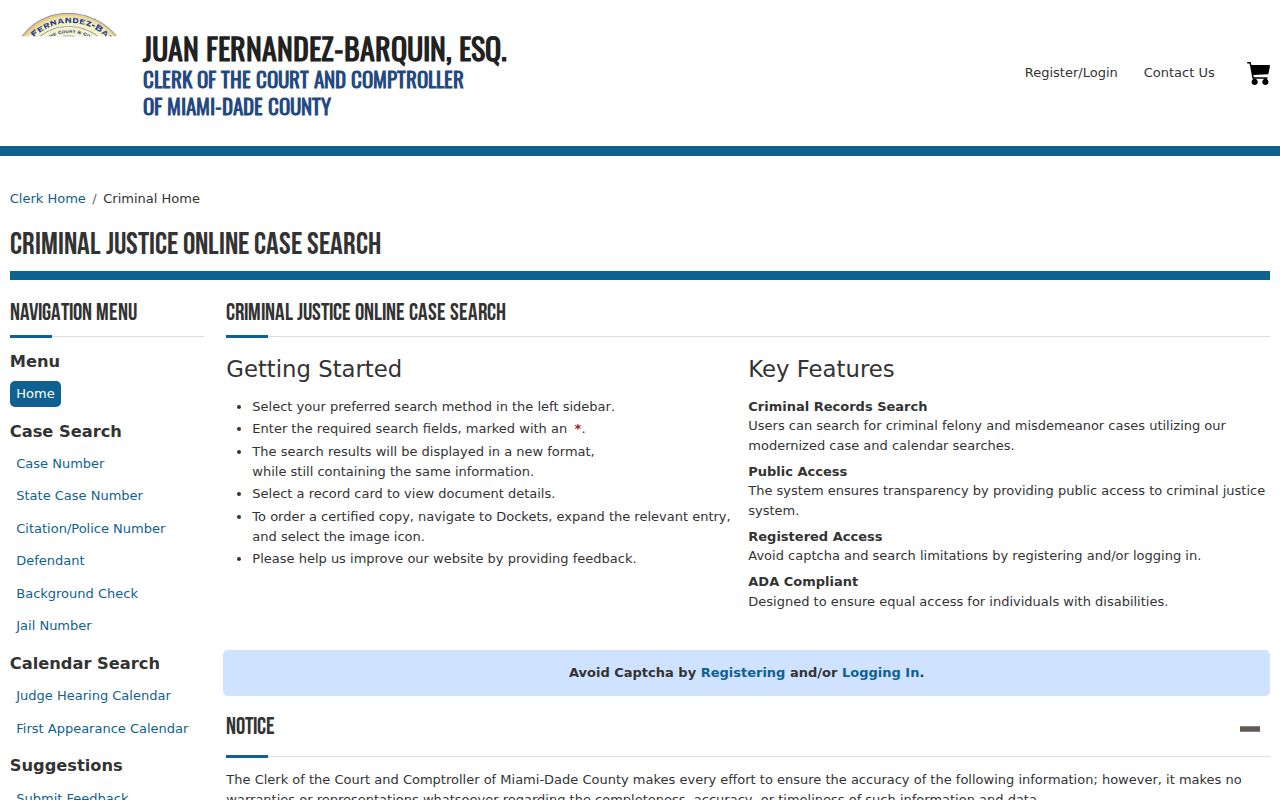
Its several identifiers make case numbers and police numbers useful controls when a name is common.
For a statewide check, FDLE's Florida criminal-history service charges $24, with a $1 card fee for the instant option. Instant results are not certified. Staff-produced searches can be certified or noncertified under the published processing times.
The official FDLE route appears in this Florida checks capture.
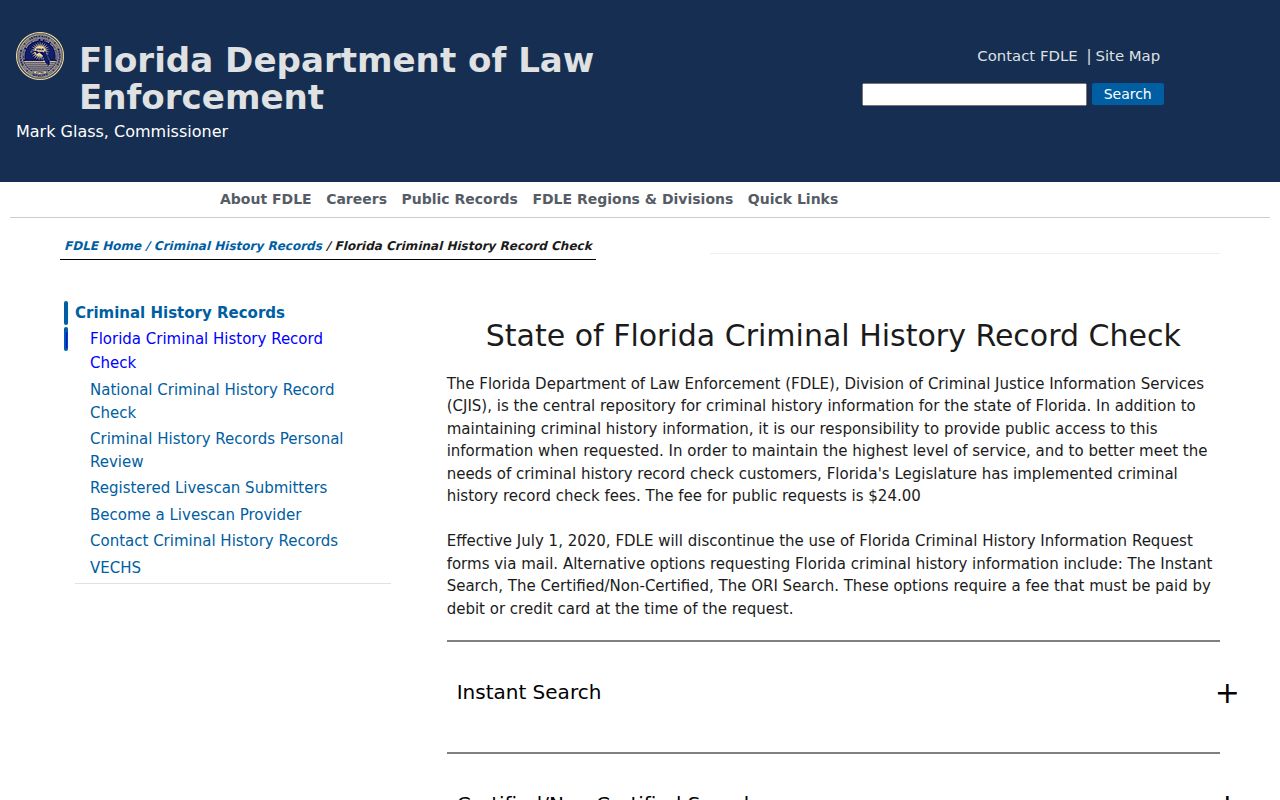
This distinction matters: a Miami court case search and a statewide criminal-history search are not interchangeable.
Link Miami Family Records
Probate can connect a decedent to a personal representative, interested persons, public petitions, and orders. Search the full name with a death window, then corroborate possible heirs through a death record or the Miami-Dade Public Library obituary index. Restricted financial, medical, adoption, and guardianship details remain controlled.
Birth records less than 125 years old are confidential under Florida law. Eligible requesters include the adult registrant, a listed parent, guardian, legal representative, or a person with a court order. A birth-parent search must use Florida's official adoption and reunion procedures or court-authorized confidential routes, never an attempt to work around sealed files.
Marriage and dissolution reports from June 6, 1927 can confirm an event, but the underlying Miami-Dade license or court file is distinct. For an old classmate or relative, a yearbook or directory paired with an obituary, probate record, or public professional affiliation creates a more defensible reunion trail.
Federal Cases Beyond Miami-Dade
Federal matters in Miami belong to the Southern District of Florida, not the county Clerk. PACER searches that court or a nationwide party index and provides federal dockets and filings. Courthouse public terminals may permit free viewing, while printing can cost money. Current online fees should be checked on PACER before ordering documents.
The federal search route is visible in this PACER capture.
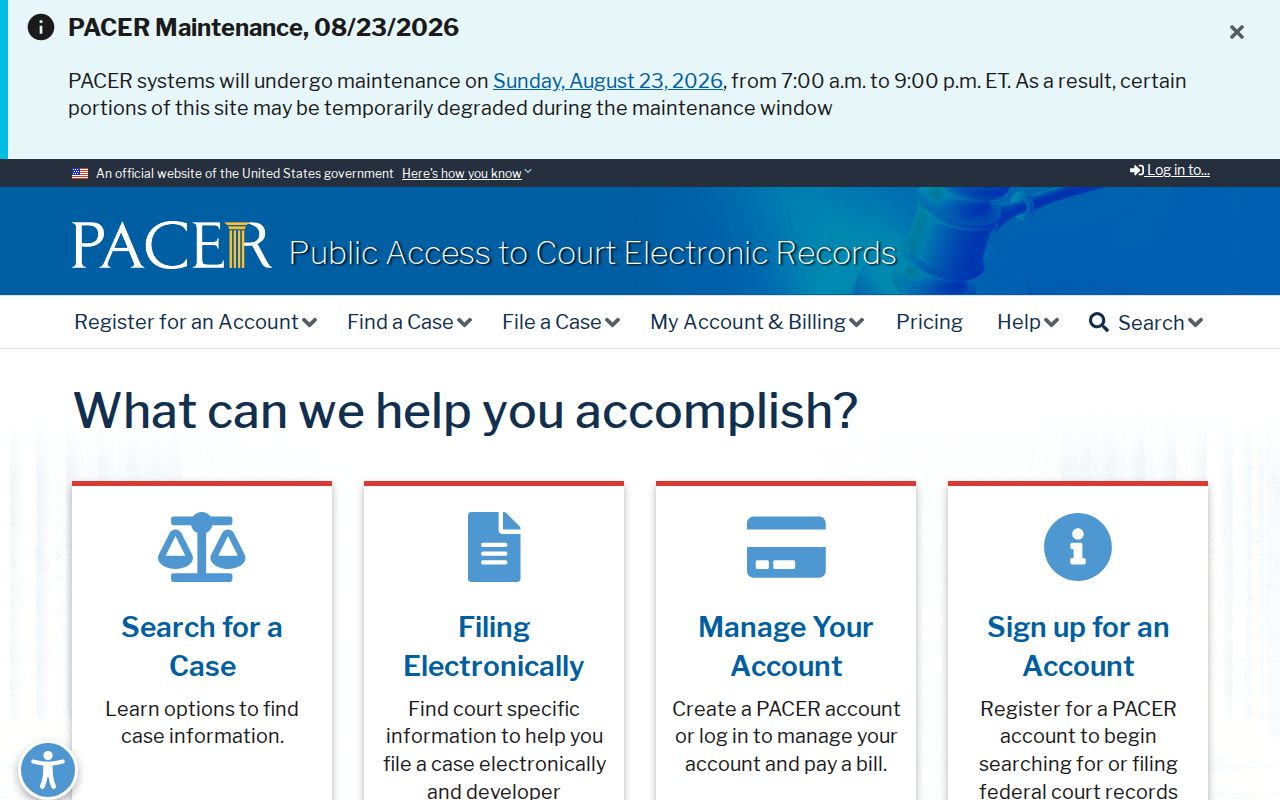
Using the right court prevents a no-result county search from being mistaken for proof that no federal case exists.
Confirm Miami Business Affiliations
Sunbiz can verify an entity's status, filing date, principal and mailing addresses, registered agent, officers or managers, annual reports, and filing images. Search by entity name, officer or agent, or document number. A role in a filing proves a dated business affiliation, not residence at the listed address.
Florida's DBPR license search and health-care license verification can confirm a regulated credential and status. Miami-Dade local business-tax and City certificate-of-use records can add a local operating link. Keep the license number, document number, and filing year so later changes do not blur the match.
When Miami Portals Stop
Florida Public Records Law allows any person to request nonexempt records without a special form or a statement of purpose. If a Miami resident lookup reaches an index but not an image, ask the custodian whether the record is available at a public terminal, by mail, as a certified copy, or only to a registered access class. A hidden image does not prove the paper is closed.
Describe the record type, names, date range, case or document number, and preferred electronic format. The custodian must respond in good faith and cite an exemption when withholding material, while releasing nonexempt portions after redaction. Errors should go back to the office responsible: property data to the Appraiser, deed images to the Recorder, voter data to Elections, and docket access to the Clerk.
Note: A narrow request costs less to review and gives staff a better chance of locating the right Miami record quickly.
Miami Resident Lookup Limits
Florida's broad access law still requires redaction. Section 119.071 and other laws protect fields for specified officials, victims, minors, and other eligible groups. Safe at Home supplies a substitute mailing address for qualifying victims. Motor-vehicle addresses are not a fallback directory, voter signatures and identity numbers remain protected, and sealed court or adoption records stay closed.
A commercial people-finder category may merge unrelated people or repeat stale data. Treat any such result only as an unverified lead and return to the official custodian. Search-engine removal also does not delete a source record. A resident lookup should use only the public facts needed for a lawful personal purpose.
Lawful use. Miami records support lawful family, estate, reunion, and personal research. Florida law does not permit stalking, cyberstalking, threats, harassment, impersonation, or attempts to defeat address confidentiality.