
Map Miami Previous Residents by Era
No one source spans the full life of a Miami address. A current parcel card starts the chain, recorded deeds identify owners, and directories or census schedules add listed occupants. Building files date the structure itself. Match each source to the target year and keep the legal description fixed as names change.
| Source | Years It Covers | Where Held | What It Shows |
|---|---|---|---|
| Online official records | Most 1974 to present | Miami-Dade Clerk | Ownership instruments, liens, parties, and legal description |
| Older books and indexes | Before 1974 | Clerk Records Library | Grantor-grantee and book/page chain |
| Archived deed microfilm | 1844 to 1902 | Florida State Archives L115 | Early recorded title trail |
| Miami directories | Since the 1920s; exact shelf run has gaps | MDPLS and HistoryMiami | Listed occupants, spouses, work, and addresses |
| Census schedules | Federal 1900 to 1950; Florida 1885, 1935, 1945 | NARA and MDPLS | Household, relationships, and tenure |
| Maps and building files | 1914 and 1921 Sanborn maps; 1950 to 1966 assessor files | Libraries, City, and State Archives | Footprint, use, construction, and assessment context |
For a recent sale, begin with the folio and current deed. For a mid-century household, pair a directory with a census. Before online coverage, bring the name, book/page, and legal description to the Records Library instead of treating a blank web result as a missing record.
Walk Miami-Dade Deeds Backward
Begin at Miami-Dade Property Search. Save the current owner, folio, situs and mailing addresses, subdivision, lot, block, legal description, and recent CFN. The folio identifies a tax parcel. In a condominium, preserve both the unit and folio because a building address may represent hundreds of separate owners.
- Find the current purchase deed by CFN or owner as grantee in Official Records.
- Record grantor, grantee, execution and recording dates, book/page, return address, and legal description.
- Search the seller as a prior grantee. Accept the match only when the legal description agrees.
- Repeat to the 1974 online cutoff, keeping a dated log and controlled name variants.
- Continue through library indexes, microfilm, and deed books for earlier years.
- Grantor and grantee
- The grantor transfers an interest; the grantee receives it.
- Chain of title
- The linked sequence of recorded transfers for one property.
- Legal description
- The lot, block, plat, subdivision, or condominium text that identifies the land when street labels change.
Declarations of domicile can associate a named person with a county residence on a date. They are sworn legal statements, not proof the person stayed there. Compare the declaration with the property roll and another source from the same period.
Continue Miami History Before 1974
The Clerk Records Library is the main fallback when the online deed chain stops. Visitors can use public computers or request staff help. Mail requests should give the full name and document type, plus a legal description or address for deeds and mortgages. Staff searches cost $2 per name per year. Copies cost $1 per page, and certification is $2 per document.
The official Records Library page shows where a previous-residents search moves from web indexes to older records.
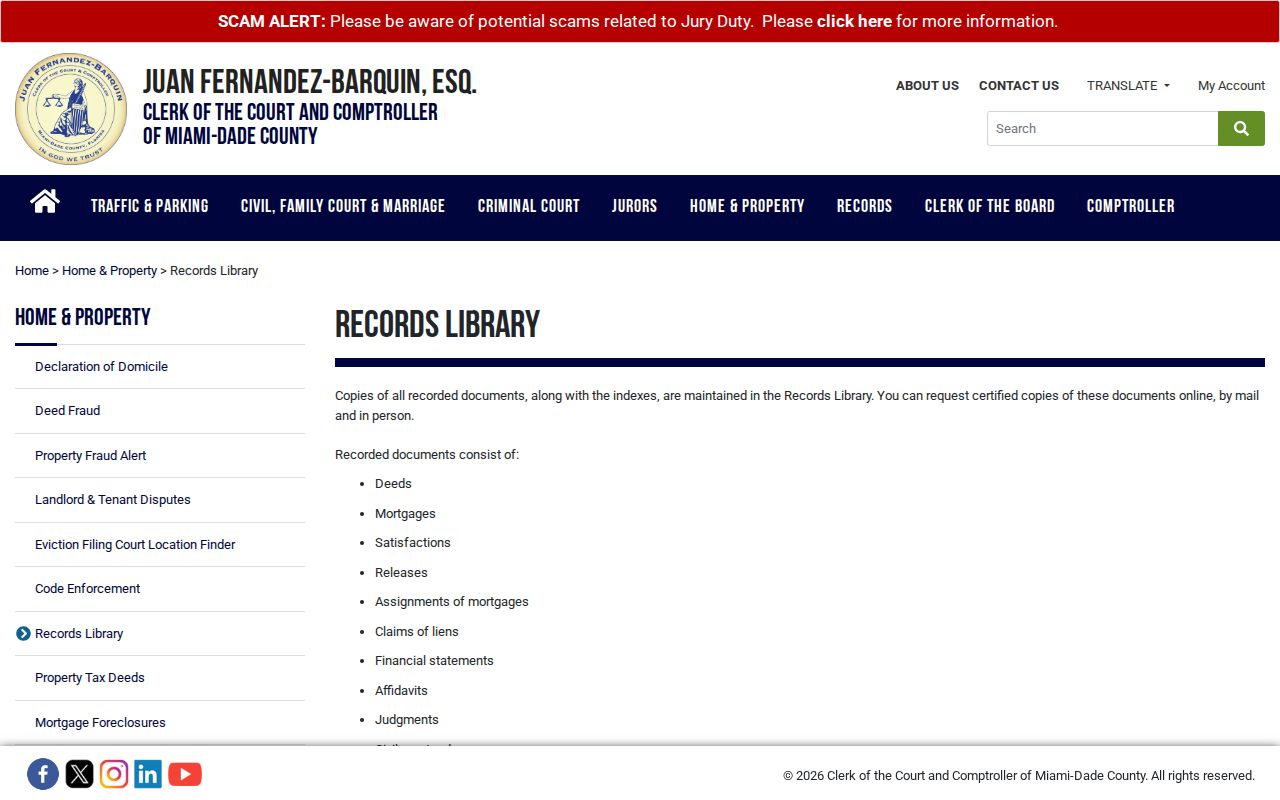
A public terminal or paper book may hold the next deed even when no online image appears.
For the earliest chain, Florida State Archives series L115 preserves Miami-Dade deed film for 1844 to 1902. Carry exact book/page references and the legal description into that search. Archived plats and probate files may bridge a change in names or land descriptions.
Date Miami Homes With Records
Owners can predate a building, while past residents can arrive between directory editions. City permit jackets may supply permit dates, applicants, contractors, plans, and later certificates. The Miami building microfilm service costs $44 for a digital search. Certification adds $1 per page. Completion is estimated at about 20 working days after payment, and delivery links expire after 14 days.
Sanborn fire-insurance maps show footprints, construction, and use rather than names. Verified Miami maps include 1914 and 1921, with revisions including 1940. State Archives series L25 adds Miami tax-assessor building files for 1950 to 1966. These sources can explain a structure between sparse occupant records.
Note: Narrow the permit range with a folio first, since certified plan sheets are rarely needed for ordinary house history.
Bridge Changed Miami Addresses
Flagler Street divides north and south, and Miami Avenue divides east and west. Keep NW, NE, SW, and SE in every search. A missing quadrant or a swapped numbered street and avenue can point to a different parcel. Preserve the historical spelling from each source beside the modern standardized address.
When an address string breaks, follow the subdivision, lot, block, plat, or condominium legal description. That description usually persists through renaming and formatting changes. A Miami postal address also may fall outside city limits, so confirm municipality and folio before requesting City building files. City guidance uses a folio prefix of 01 as a quick jurisdiction check.
Pair Miami Directories With Censuses
A deed chain identifies owners, not every person who lived at the address. A city directory may list a resident, spouse, occupation, and home. A criss-cross section reverses the arrangement and lists names under street numbers. Federal schedules add household relationships and tenure. Florida's 1935 and 1945 censuses fill years between federal decades.
- Choose the directory edition nearest the target year and record title, service area, page, and abbreviation key.
- Find the street address, then check each listed name in the alphabetical section.
- Move one edition at a time and mark first and last appearances.
- Pair the address with the nearest public federal or Florida census.
- Return to deeds for title proof, since neither source proves ownership.
The latest public federal population schedule is 1950 under the 72-year rule. Miami's 1933 and 1938 to 1941 telephone books are digitized, but no complete online shelf list gives every local reverse-directory year. The Miami city directory collections resource covers the holdings themselves.
Confirm Miami Previous Residents' Events
Vital records can explain a trail's end or a surname change, but access rules matter. Florida births less than 125 years old are confidential. Death certificates without cause are generally public, while cause-of-death data is confidential for 50 years except to eligible requesters. Marriage and dissolution reports are generally available, though a court file is a separate record.
The Florida birth certificate service states its eligibility and order channels.
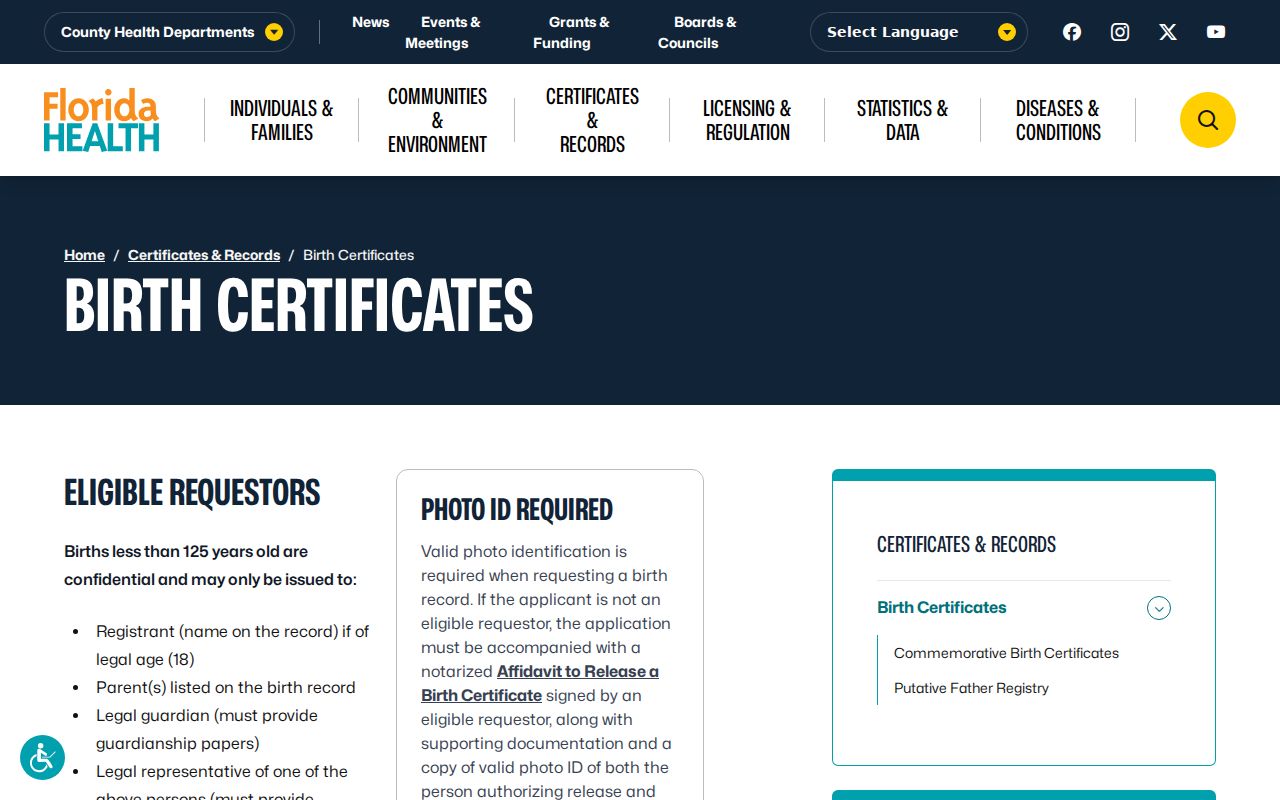
Those controls keep a house-history search from bypassing confidential birth records.
The Florida death certificate service distinguishes copies with and without cause.
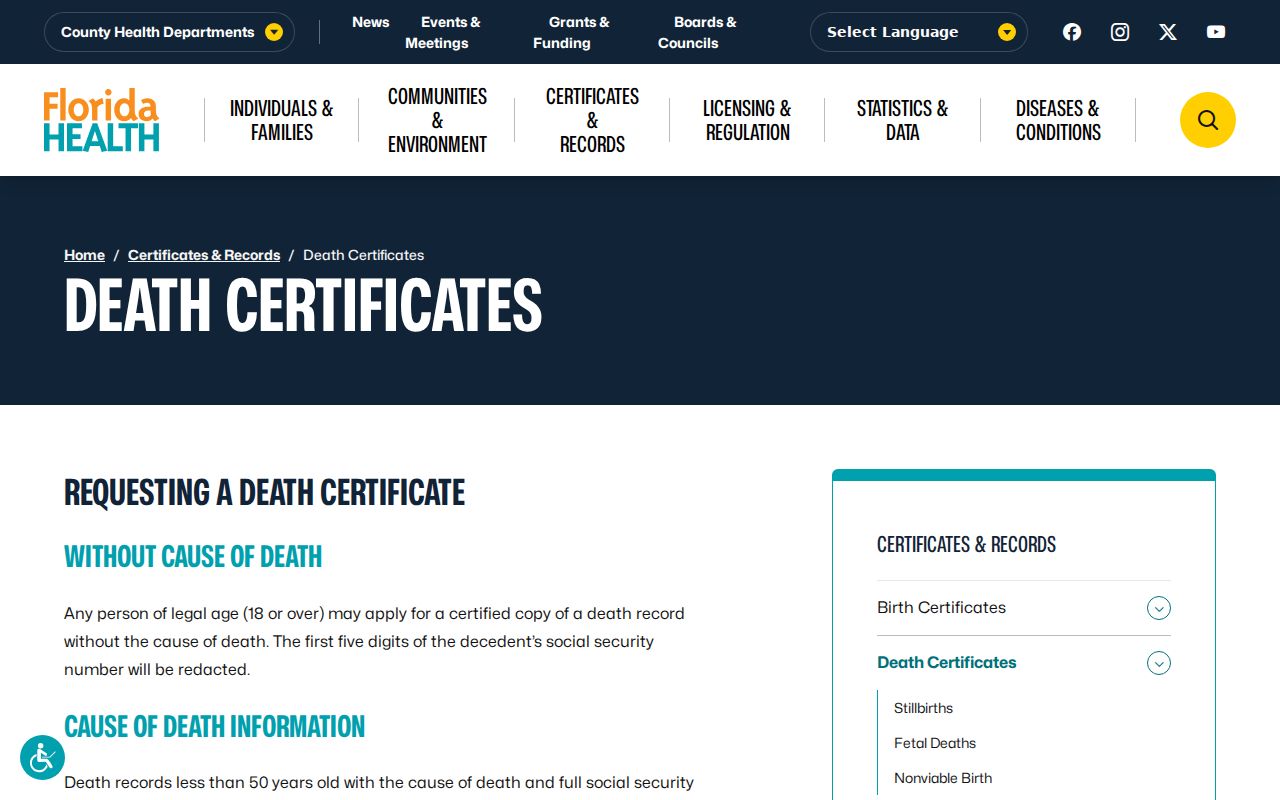
The distinction helps select the lawful record needed for a deceased former occupant.
Link Past Miami Names Carefully
Miami name research should retain accents, compound surnames, both paternal and maternal surnames, maiden forms, initials, and spacing variants. Search the narrowest form first. Record which spelling came from which official source so similar people do not collapse into one identity.
The Florida marriage certificate service offers state reports from June 6, 1927 forward.
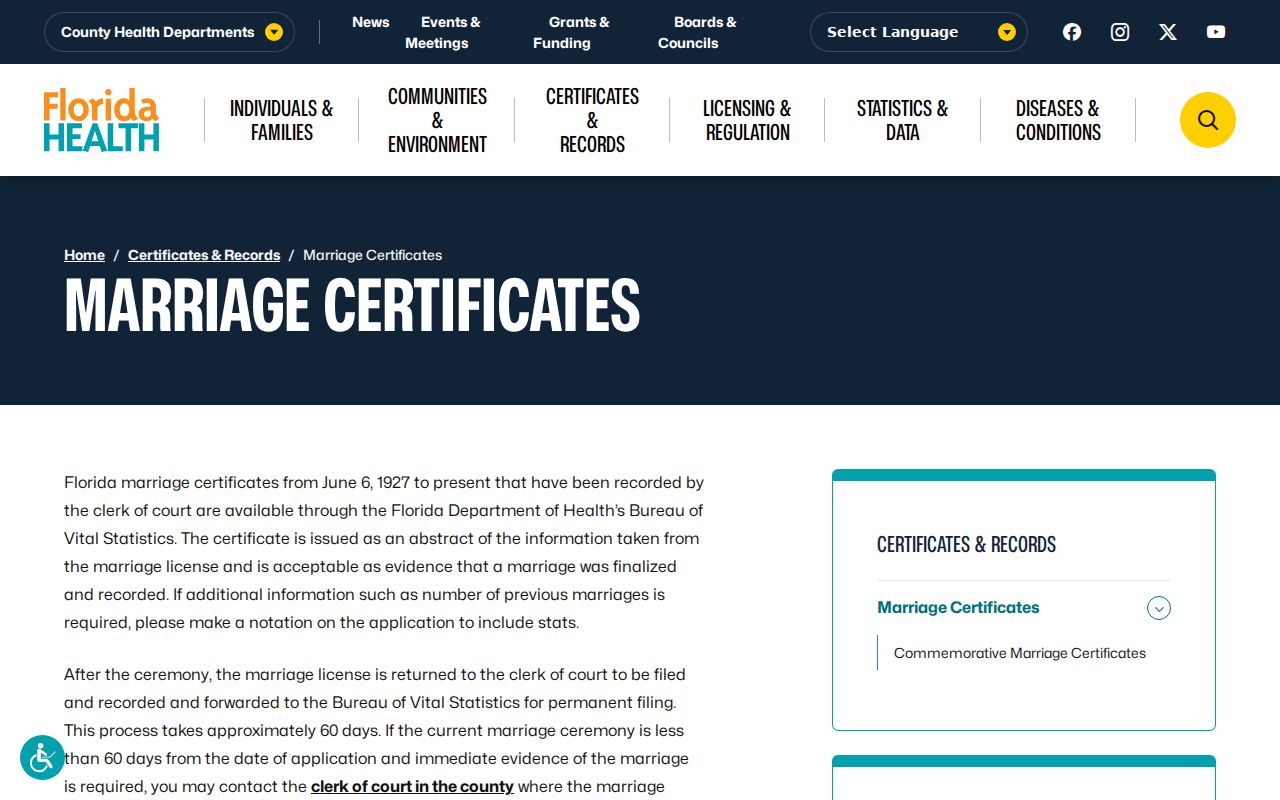
A marriage report can link names, but the address still needs a dated deed, directory, or census match.
The Florida dissolution certificate service covers reports from the same date.
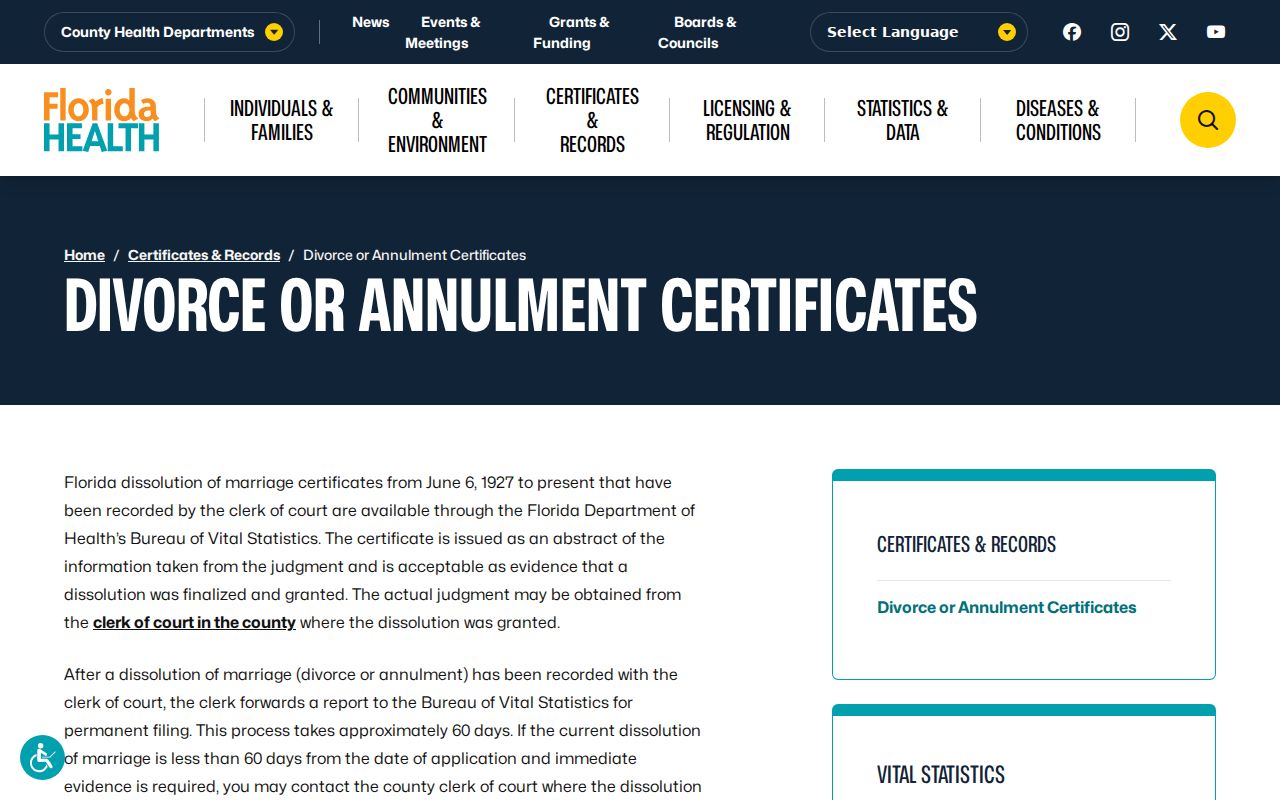
The report confirms the event; the Clerk holds any public part of the underlying court case.
Close Miami Previous-Resident Trails
The MDPLS Obituary Index, newspapers, cemetery sources, and public probate records may explain where a person went after leaving an address. Obituaries can name relatives, congregations, service, and burial. Public probate petitions or orders may identify a decedent, personal representative, and interested persons, while restricted medical and financial material remains controlled.
Search probate with the full name and death window. Treat an address in an old pleading as dated evidence. Miami-Dade's Medical Examiner database covers only cases handled by that office, so absence is not proof that someone is alive or died elsewhere. Previous residents are strongest matches when two independent sources share an address, date, and distinctive name or family tie.
Lawful use. Research previous residents for house history, genealogy, heirs, or personal curiosity. Never use the trail to harass, track, threaten, or harm a living person.